Blockchain Technology – Meaning, Uses & Future Applications
Blockchain: The Quiet Technology Changing How We Trust Systems
Right now, technology is quietly changing how we live, work, and trust information.
Among all the terms people talk about, one idea has a special place—not for being flashy, but because it's rethinking how systems are built and who we trust. Many people only think of it in terms of Bitcoin or digital money, but Blockchain is much bigger than just cryptocurrency. At its core, it changes how records are stored, shared, and trusted.
Instead of keeping data in one central place, Blockchain spreads information across a global network of computers.
Data is grouped into “blocks,” and once a block is added, it links permanently to the one before it. This creates a chain that can't be secretly edited or erased. There's no single authority in charge, and that’s what makes this technology so powerful. Trust is built into the system itself, not by institutions standing in the middle.
Understanding the Basics Without the Jargon
Think of Blockchain as a shared digital notebook that thousands of people hold copies of at the same time.
Every time something new happens—a transaction, an agreement, or a record update—it gets written into a new page. Once that page is confirmed by the group, it can’t be changed.
This confirmation process is called consensus.
Different networks use different rules, like Proof of Work or Proof of Stake, to agree on what information is valid. Once approved, the data becomes nearly impossible to alter. To change even a single detail, someone would have to rewrite the entire history on every copy of the notebook at once. That level of effort makes cheating unrealistic.
Because Blockchain is decentralized, it is also resilient.
If one computer fails or gets attacked, the system keeps running. Transparency is built in, meaning records can be checked at any time. Security comes not from secrecy, but from strong design and shared verification.
Blockchain Beyond Digital Currency
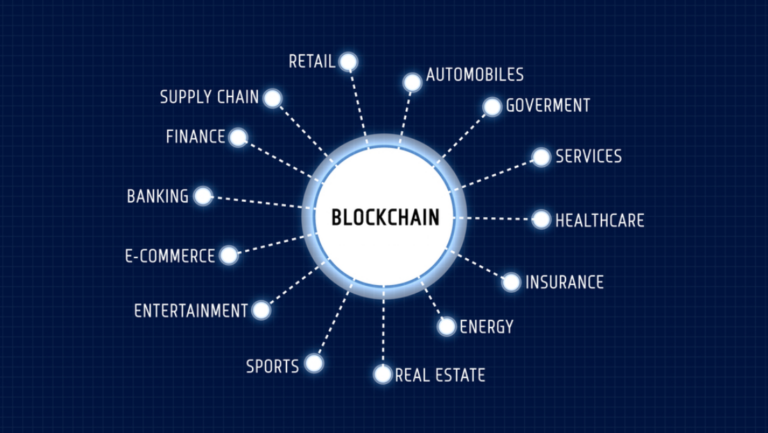
Although Blockchain became famous through Bitcoin, its real value lies in how it tracks and protects information.
Industries are now using it to improve transparency, efficiency, and trust.
Take supply chains as an example.
Imagine buying a bag of coffee and scanning a code on the package. Instantly, you can see where the beans were grown, how they were shipped, and when they were packaged. Every step is recorded on Blockchain, making it difficult for fake or low-quality products to enter the system. Mistakes are easier to find, and trust grows naturally through visible proof rather than marketing claims.
Finance is another area where Blockchain is making a real impact.
International payments that once took days and involved multiple banks can now move in minutes. Smart contracts—programs that automatically run when conditions are met—handle tasks like releasing payments or managing loans. These contracts run on Blockchain, leaving behind a permanent and transparent record. There is less paperwork, fewer delays, and fewer opportunities for manipulation.
Healthcare, Identity, and Everyday Records
Healthcare systems are also beginning to explore Blockchain.
Medical records are often scattered across hospitals, clinics, and labs. With Blockchain, patients could control a single secure health record and decide who can access it. Doctors get accurate information when needed, and privacy stays protected by design.
Digital identity is another promising use.
Instead of relying on multiple usernames, passwords, and ID cards, people could manage their identity through Blockchain. Access could be granted temporarily and revoked easily. Voting systems could become more secure and transparent. Property ownership and real estate transactions could move faster with fewer middlemen.
In all these cases, Blockchain aims to replace slow, opaque systems with ones that are open, verifiable, and efficient.
Challenges That Still Need Solving
Despite its promise, Blockchain is not perfect.
One major issue is balancing speed, security, and decentralization. Early systems like Bitcoin prioritize security and independence, which can slow transaction speeds. Developers are now building new solutions to improve performance without losing trust.
Regulation is another challenge.
Governments around the world are still figuring out how to manage Blockchain technology. They want to prevent misuse while still allowing innovation to grow. Clear rules are necessary, but too much control could limit the very benefits that make Blockchain valuable.
Environmental concerns have also raised questions, especially around energy-intensive systems like Proof of Work.
This has pushed many projects toward greener alternatives, including Proof of Stake and other low-energy methods.
For everyday users, usability remains a hurdle.
Wallets, keys, and technical language can feel intimidating. For Blockchain to become mainstream, it must feel as easy as using a regular app or website. Different networks also need to communicate smoothly with each other and with existing systems.
A Technology Built for the Future
At its heart, Blockchain is about redesigning trust.
It allows systems to work without constant oversight from central authorities. Instead of asking an institution to verify the truth, the system proves it automatically.
As Blockchain continues to evolve, it may fade into the background of daily life.
Just like we do not think about how email works, people may use services powered by Blockchain without noticing it. Yet its influence will still be felt—in how value moves, how data is protected, and how trust is built online.
The journey has not been instant.
It started quietly, faced skepticism, and continues to adapt. But the direction is clear. Blockchain is not just a trend; it is a foundational technology that could reshape how digital systems operate. The future may still be uncertain, but the possibilities are growing—and they extend far beyond what most imagined at the beginning.