Doctor of Physical Therapy at DUHS | DPT Program Details & Admission
Helping people walk again, move without pain, or return to their normal lives after an illness isn't always loud or dramatic. It's quiet, steady, and deeply meaningful. Physical therapists do this every day. They guide people through recovery, often without being noticed, but their impact lasts a lifetime. In Pakistan, one institution has been very important in training these professionals: Dow University of Health Sciences.
At DUHS, physical therapy isn't considered a secondary subject.
It's seen as a key part of healthcare. The university focuses on movement, recovery, and long-term function, not just survival. This approach influences how students are taught and how patients are cared for. The main goal remains simple—helping people regain control of their bodies and their lives.
Within DUHS, the Dow Institute of Physical Medicine & Rehabilitation works quietly but powerfully.
This institute is where future physical therapists really develop. Students don't just learn theories here. They learn how pain feels, how recovery looks, and how patience is part of treatment. Everything is focused on real people and real problems.
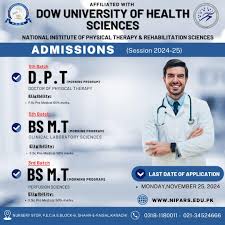
The Doctor of Physical Therapy (DPT) program at DUHS is well-organized.
It lasts five years and prepares students for real-world rehabilitation work. From the first year, learners understand that physical therapy is more than just exercises. It's about listening, observing, and responding to each patient's needs. This balance between science and empathy is one of the strongest qualities of DUHS.
In 2007, DUHS made an important decision.
It launched Pakistan's first civilian rehabilitation center that brought together various medical specialties. This was a quiet but powerful move. Instead of focusing only on diagnosis, the university chose to invest in long-term healing. This choice showed a deeper understanding of health, including movement, function, and quality of life.
Over time, DUHS continued to strengthen this vision.
While it had already been producing skilled doctors for many years, it now began training therapists who think carefully about recovery. These professionals look beyond X-rays and reports. They focus on how a person moves, works, and lives after injury or illness. This shift added a new dimension to healthcare education at DUHS.
The DPT program at DUHS is based at the Ojha Campus in Karachi.
Students are trained to handle movement disorders, physical disabilities, and rehabilitation needs confidently. Learning doesn't stay limited to textbooks. Classroom lessons are closely linked to practical experience from the start.
In the early years, the focus is on building a strong foundation.
Subjects like anatomy, physiology, and kinesiology are taught clearly and applied. Students understand how the body works before learning about how it fails or heals. As the program progresses, training becomes more specialized. Learners explore neurological rehabilitation, heart and lung recovery, and musculoskeletal therapy.
One of the strongest features of the DPT course at DUHS is clinical exposure.
Students spend a lot of time working directly with patients. Through teaching hospitals linked with DUHS, they see a wide range of conditions. Under the guidance of experienced supervisors, they learn how to assess patients, create treatment plans, and adjust therapy as needed.
This hands-on training makes a real difference.
Graduates of DUHS don't feel lost when entering professional life. They understand pressure, responsibility, and decision-making. They know how to stay calm in tough situations. At the same time, patients receiving care through these training clinics benefit directly, making education and service go hand in hand.
Research is also important at DUHS.
The university encourages students and faculty to study local health issues. Instead of copying international models, they examine what works best in Pakistan. Research topics often include affordable stroke rehabilitation methods and common muscle or joint problems affecting the population.
Because of this research culture, DUHS produces graduates who think critically.
They don't just follow instructions. They ask questions, test ideas, and improve methods. Many research findings contribute to wider academic discussions, giving DUHS recognition beyond national borders.
Choosing the DPT program at DUHS means choosing steady growth.
The university combines its long-standing reputation with modern teaching methods. Facilities are up-to-date, but more importantly, teachers remain committed. Faculty members guide students closely, often beyond scheduled hours, shaping both skills and mindset.
Empathy is taught alongside science at DUHS.
Students learn that recovery takes time and trust. Technical knowledge matters, but so does kindness. This balanced approach creates therapists who treat patients as people, not just cases.
Beyond physical therapy, DUHS itself has a long and respected history.
Its roots go back more than seventy years to Dow Medical College. In 2004, a formal step by the Sindh government brought several institutions together under one university. Since then, DUHS has grown into Pakistan's largest health sciences network.
Today, DUHS offers education in medicine, nursing, pharmacy, laboratory sciences, and rehabilitation.
It operates across multiple campuses in Karachi and works with many affiliated institutions. Despite its size, the university remains focused on service. Affordable healthcare and community support remain central to its mission.
Guided by a long-term vision called "A Bridge to Excellence," DUHS continues to grow carefully.
Standards remain high, but the purpose stays human. Education here is not only about degrees. It's about responsibility, care, and lasting impact.
In the end, DUHS shapes more than professionals.
It shapes healers—one patient, one movement, one recovery at a time.