Black Carbon Emissions in the Arctic: Causes, Impacts & Climate Risks
The Arctic is warming much faster than almost any other place on Earth—about four times faster than the global average. This change isn’t slow or hidden. It’s happening right now, and a big part of it comes from black carbon emissions, a type of pollution that has a major impact despite being less well-known than greenhouse gases.
So, what is black carbon?
In simple terms, it’s soot. It forms when fuels like diesel, coal, wood, or heavy oil burn in an incomplete way. Think of it as very small black particles that come from engines, ships, factories, gas flares, and wildfires. Unlike carbon dioxide, which stays in the air for a very long time, black carbon doesn’t last long—just a few days or weeks. But while it's in the air, it can trap a lot of heat, especially in the Arctic.
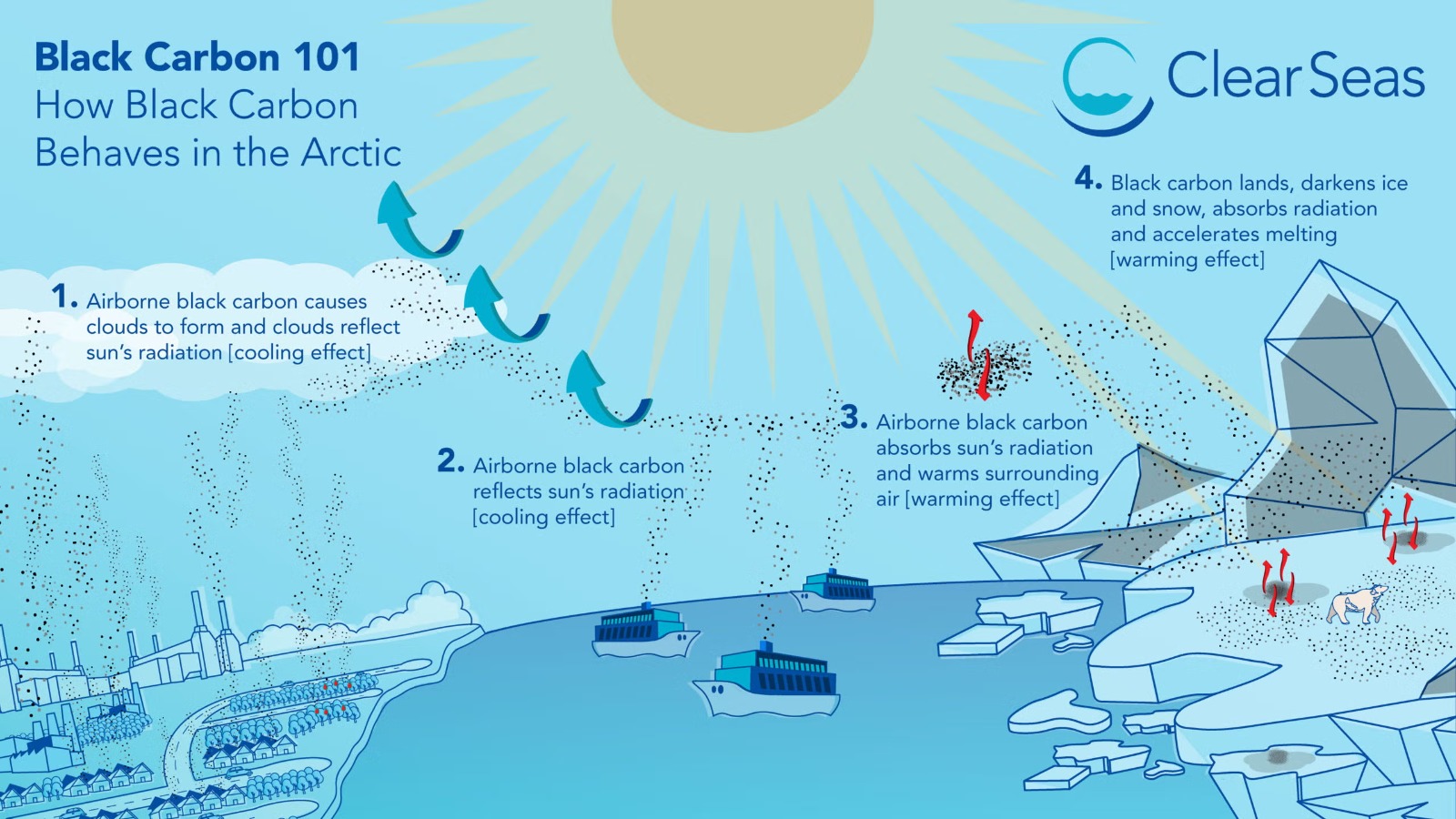
When black carbon is in the air, it absorbs sunlight and warms the atmosphere.
When it lands on snow or ice, the effect becomes even worse. Snow usually reflects sunlight back into space, but when soot makes it darker, it starts absorbing heat instead. In the Arctic, this means ice melts faster, becomes thinner, and the ocean gets warmer.
For years, people thought of the Arctic as a clean, untouched place.
But science tells a different story. Research from Island Bely in western Siberia shows that most of the soot pollution in the region comes from human activities. Between 2019 and 2022, nearly 83 percent of black carbon emissions in the northern Arctic were linked to industrial sources. In the winter, this number went above 90 percent.
One of the biggest sources is gas flaring from oil drilling.
These flames burn all the time, often inefficiently, and send thick clouds of soot straight into the cold Arctic air. The pollution doesn’t travel far—it lands quickly on nearby snow and ice, making its warming effect even stronger.
At the same time, climate change is changing how wildfires behave in the north.
Forests in Siberia that were once hard to burn are now catching fire more easily. Between 2019 and 2021, wildfires in East Siberia increased during the summer months, even when industrial pollution went down. In August 2021, fire activity reached levels not seen since the late 1970s.
These fires are important because they release a lot of black carbon.
Smoke from Siberian wildfires has been shown to contribute nearly half of the soot found on Arctic snow and ice. Over three years, wildfires accounted for between 62 and 79 percent of the increased black carbon emissions entering the Arctic. What was once a seasonal problem has now become a year-round issue.
This creates a dangerous cycle.
Black carbon darkens snow. Darker snow melts faster. Melting ice reveals darker ocean water, which absorbs more heat. That extra heat dries out forests, increasing the risk of fires, which release even more soot. The cycle continues on its own.
Shipping adds another problem.
As sea ice melts in the Arctic, new shipping routes are opening. Between 2013 and 2023, the number of ships traveling north of the 60th parallel went up sharply, with ships traveling much farther than before. Most of these ships use heavy fuel oil, which is the dirtiest type of fuel available.
In 2024 alone, ships released more than 3,300 metric tons of black carbon emissions into the Arctic.
This soot lands directly on ice and water, causing extra warming in one of the most sensitive areas on Earth.
What makes this situation frustrating is that it’s fixable.
Unlike carbon dioxide, cutting black carbon can have quick benefits. Switching ships from heavy fuel oil to cleaner fuels like marine gas oil could reduce black carbon emissions by over 90 percent almost immediately. Better engine technology, less gas flaring, and stronger fire prevention efforts would also make a big difference in the Arctic.
Scientists have been clear.
Studies from Island Bely, isotopic research from Svalbard, and long-term observations from Tiksi all point to the same thing. Black carbon emissions are speeding up warming in the Arctic, and the sources are well known.
What’s missing isn’t science—it’s political will.
Talks at the International Maritime Organization have been going on for years. Rules to limit black carbon emissions from Arctic shipping are still voluntary. Some countries, like France, Germany, and Denmark, support mandatory cleaner fuels, but resistance from shipping companies and oil interests has slowed progress.
At the same time, the consequences are becoming harder to ignore.
Sea ice is disappearing. Indigenous hunters are having trouble as travel routes become unsafe. Weather patterns farther south are getting more chaotic as the Arctic warms. Thawing permafrost could release huge amounts of methane, another powerful greenhouse gas.
Every ton of black carbon settling on Arctic ice brings the region closer to irreversible changes.
This isn’t a distant issue or a future problem. The ice is melting now.
The solutions are already available.
Cleaner fuels. Stronger regulations. Better fire management. The cost is small compared to what’s at stake. The real question is whether action will come in time—or whether we’ll keep watching the white snow of the Arctic turn darker, warmer, and closer to ash.