Nipah virus: impact, origins, and causes of emergence
The Unseen Risk Within the Trees
When people think about dangerous diseases, they often picture fast-moving outbreaks or famous viruses. But some of the most serious threats are quiet, waiting for the right time to strike. The Nipah virus is one such threat. It doesn't appear every year, and when it does, the number of cases might seem small. However, its effects are very serious.
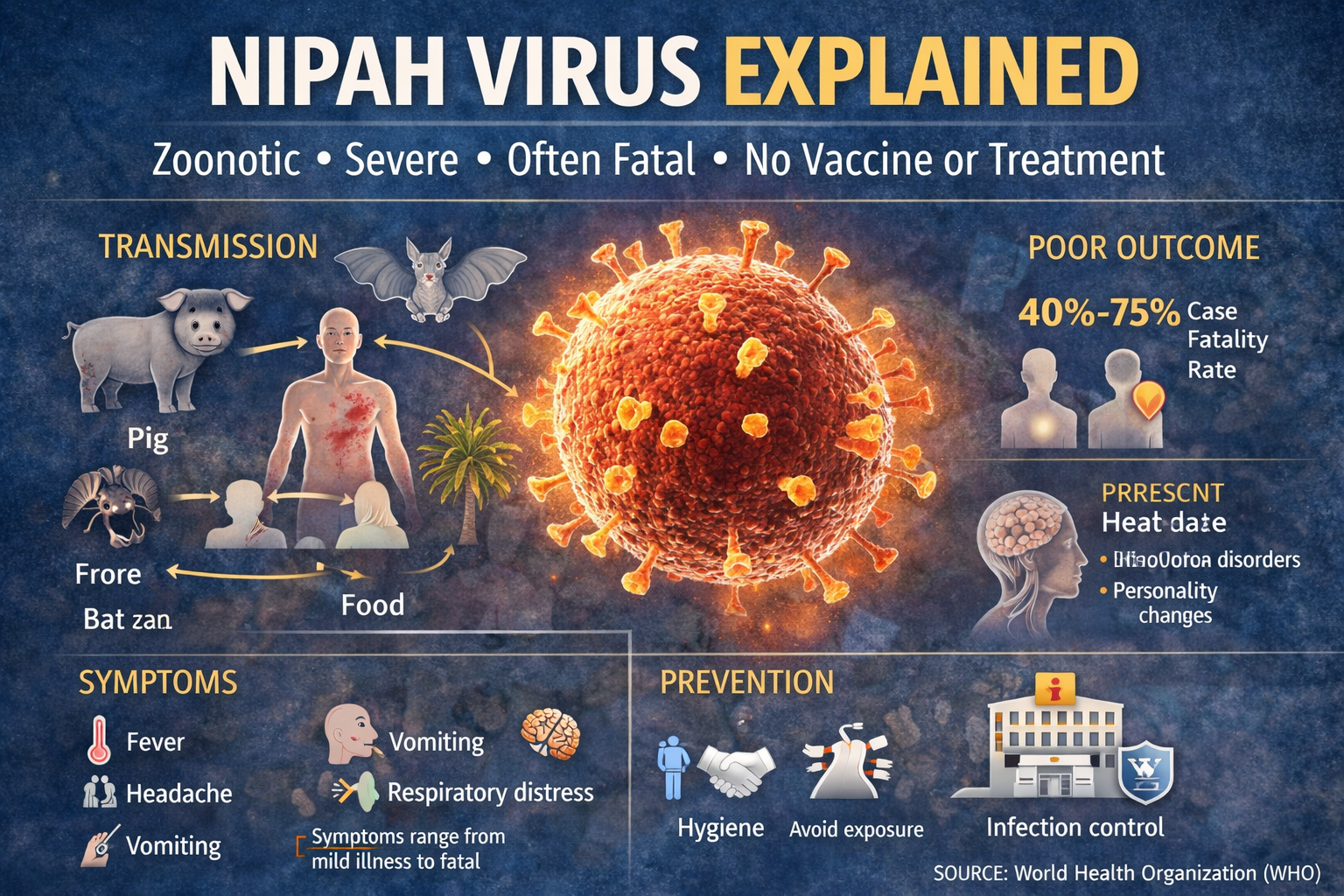
The Nipah virus is a zoonotic disease, meaning it spreads from animals to humans. What makes it especially concerning is its high fatality rate and how quickly it can affect families, hospitals, and whole communities. Outbreaks in South and Southeast Asia have shown that this virus isn't just a medical issue—it also shows how humans interact with nature.
To understand the Nipah virus, we need to look beyond just symptoms and numbers. We need to consider forests, farms, food habits, and how people choose to live.
What the Nipah Virus Does to the Human Body
The Nipah virus is not subtle. Infected people can become very ill within days. Some start with fever, headache, and weakness. Others suddenly become unable to breathe due to lung failure. In severe cases, the brain swells, causing confusion, seizures, coma, or even death.
On average, about 40% of people who get infected don't survive. In some outbreaks, this number has gone as high as 75%. Even those who survive often face long-term issues, like repeated seizures, personality changes, or memory loss. Full recovery doesn't always mean going back to normal life.
What makes the Nipah virus especially scary is that some people show mild symptoms initially but can still pass it on through close contact, body fluids, or caregiving.
How a Single Case Can Disrupt an Entire Community
An outbreak of the Nipah virus isn't just about one sick person. When someone gets infected, fear spreads quickly. Hospitals become emergency centers. Wards close. Normal medical services are disrupted. Doctors and nurses work under intense pressure, sometimes risking their own lives.
This was clearly seen in Kerala, India, during outbreaks starting in 2018. Schools shut down. Markets emptied. Farms were left abandoned. People avoided even meeting relatives. The Nipah virus affected livelihoods, mental health, and trust within communities.
Every outbreak leaves behind hidden costs—lost income, broken routines, and lasting fear. These impacts quietly grow every time the virus comes back.
Fruit Bats: Quiet Carriers, Not Offenders
Fruit bats, especially flying foxes, are the natural hosts of the Nipah virus. These bats don’t get sick from the virus. It lives quietly inside them, passing from bat to bat without causing harm.
The Nipah virus has been found in bat saliva, urine, feces, and even birthing fluids. This doesn't mean bats are dangerous by nature. They help with pollination and seed dispersal. The problem starts when human activities bring bats closer to people.
How the Nipah Virus First Reached Humans
The first major Nipah outbreak happened in Malaysia in the late 1990s, in a village called Sungai Nipah. Large pig farms were built near fruit trees that attracted bats. The pigs likely became infected after eating fruit contaminated with bat saliva or droppings.
Once the virus entered crowded pig farms, it spread quickly. Many farm workers got sick, and over 100 people died. To stop the outbreak, millions of pigs were killed, causing huge economic damage.
In Bangladesh and parts of India, the Nipah virus follows a different path. People collect raw date palm sap, which bats often drink at night. As they feed, bats contaminate the sap with saliva or droppings. When people drink the sap without boiling it, the virus passes directly to humans.
Human Choices That Increase the Risk
The Nipah virus doesn’t just appear out of nowhere. Outbreaks happen when the natural balance is disturbed.
1. Deforestation and Habitat Loss
When forests are cleared for farming or cities, bats lose their natural homes. They move closer to villages, farms, and orchards. This increases contact between bats, livestock, and humans, raising the risk of Nipah virus spillover.
2. Intensive Farming Practices
Crowded animal farms create perfect conditions for viruses to spread. Once the Nipah virus enters such an environment, it can jump quickly between animals and then to humans.
3. Climate and Weather Changes
Droughts and food shortages push bats to seek food near human settlements. These changes make Nipah virus transmission more unpredictable.
4. Global Travel
A person infected with the Nipah virus can travel before showing symptoms. This means a local outbreak could reach new regions if systems are unprepared.
Shared Responsibility
The Nipah virus isn't about blaming bats, farmers, or communities. It's about understanding cause and effect. The virus has always existed in nature. Human actions—cutting forests, expanding farms, and changing food habits—create the conditions for it to emerge. Every tree cut and every uncovered sap pot increases risk. The warning signs appear long before the first fever.
Moving Forward Together
Fighting the Nipah virus requires more than just quick hospital responses.
It needs a "One Health" approach that connects human health, animal health, and environmental care. Protecting forests, covering sap collection pots, improving farming practices, and educating communities can significantly reduce risk. Strong surveillance and early reporting save lives.